This DJI/Drone Ban Was Never About Security — And Here's the Proof
BY BRIAN LAYHEW
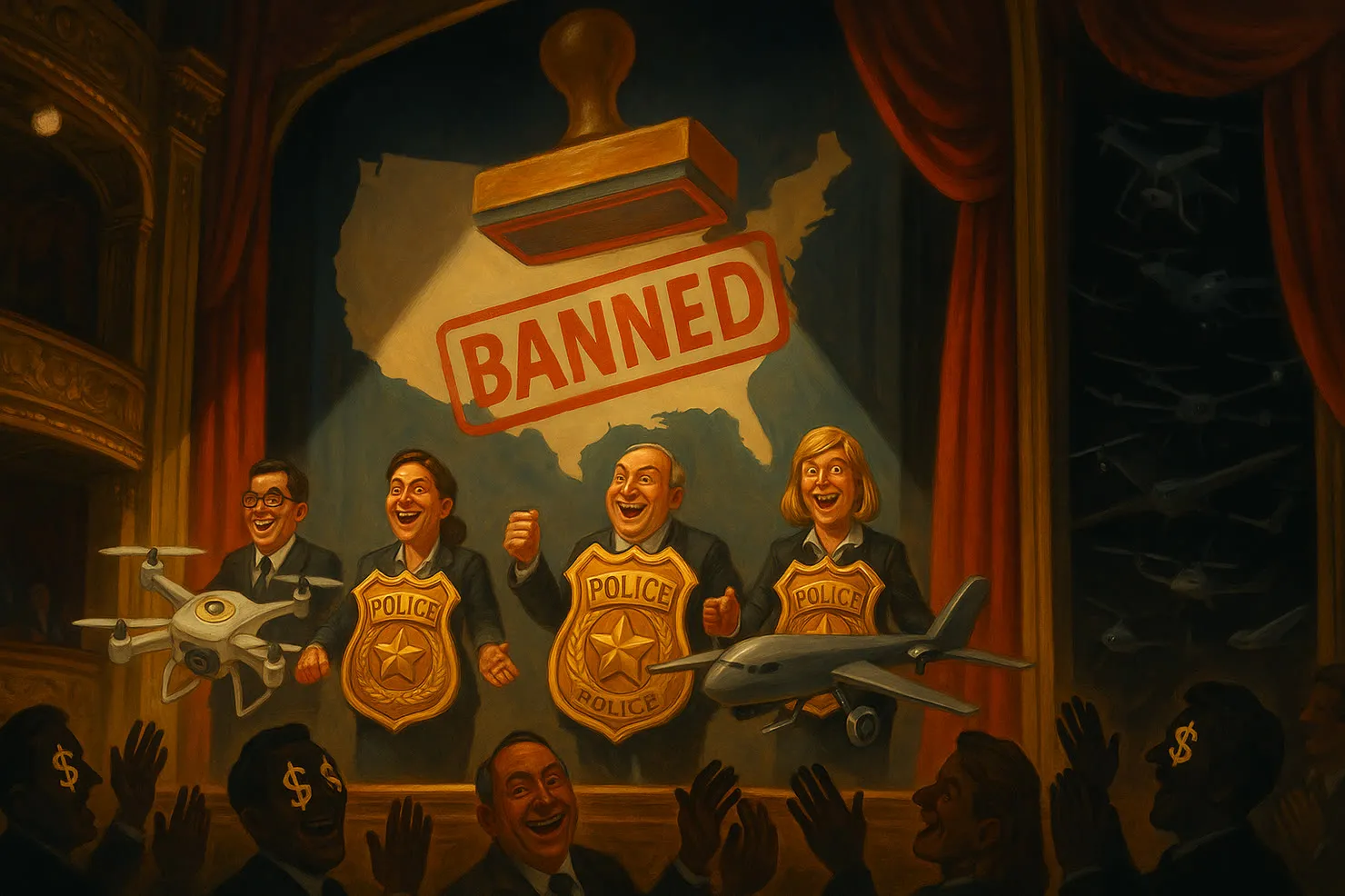
Let's cut to it. This is not about security. It is politics and lobbying, and the FCC and NDAA language show it.
On December 22, 2025 the FCC put foreign UAS and their critical components on the Covered List. At the same time, NDAA text pushes scaling domestic production and reducing reliance on foreign parts. That is industrial policy dressed as national security.
If this were a true security emergency, every unit already in the sky would have been grounded on day one. Instead, only future purchases are blocked.
The FCC's Covered List: where logic goes to die
The December 22 announcement added "UAS and UAS critical components produced in a foreign country" to the FCC Covered List. It is not just about DJI or China. It covers all foreign platforms and parts — flight controllers, batteries, radios, and navigation systems.
That sweep includes Swiss-made Wingtra, which is Blue and Green listed, approved across U.S. programs, and the exact kind of compliant system agencies asked us to use. So which rule are we supposed to follow today?
Real example from our world: a village approves a Wingtra-based ADA curb ramp inventory, then purchasing freezes the PO because "foreign made" appears on a radio module. Two weeks of back and forth, new waiver language, and a lost weather window.

The security theater performance
The government's position is essentially this: foreign-made drones present such an immediate and severe national security threat that all new imports must stop effective immediately — however, the thousands of identical units already in American hands can continue operating business as usual.
It's like declaring a food poisoning outbreak from a specific restaurant, then only blocking future orders while encouraging people to finish the plates already in front of them.
The real-world impact: confusion for everyone
Picture running a public safety drone program with a fleet of enterprise units. According to the government those aircraft pose enough of a security risk to ban all future sales, but not enough risk to keep you from flying your current fleet on search and rescue missions.
Replacement parts become uncertainty. Firmware updates become risk reviews. End of life becomes emergency procurement. Vendor lists and definitions can change overnight, and the agencies and contractors who played by the rules end up holding the bag.
Two quick examples. A county PCI program schedules 12 weeks of flights, then pauses because a replacement radio needs separate authorization. A design team bids a corridor topo with Wingtra linework in the spec, then legal deletes the brand name the day before award and demands a domestic-only substitute that does not meet the required GSD.
Following the money: industrial policy in security clothing
Buried in the National Security Determination is a telling statement about the real motivation: "To ensure American companies are able to meet both peacetime and wartime demand, the U.S. UAS industry cannot rely on foreign-produced UAS critical components." The stated goal elsewhere is to scale up domestic production and expand exports of American-manufactured drone technology.
That can be a legitimate policy goal. Say it plainly and publish a roadmap operators can plan around, instead of throwing the industry into a panic.
What this means for operators right now
- You can still fly existing foreign-made drones. The ban applies to new equipment authorization, not existing operations.
- You can't expand or replace with new foreign models. Any foreign-made drone or critical component seeking new FCC authorization is blocked.
- The compliance landscape is murky. Federal projects may carry restrictions beyond this FCC ruling.
- American alternatives exist but come with tradeoffs in cost and capability.
The transition game
Smart operators saw this coming and built transition plans. We moved primary mapping to the Wingtra Ray, a Swiss-made system that is Blue and Green listed and widely approved, which gives our municipal and engineering clients sub-inch mapping without the usual entanglements.
- Keep a stocked spares kit for radios, props, batteries, and cables to avoid last-minute authorization surprises.
- Maintain dual-qualified platforms on active contracts so a job can pivot without a re-bid.
- Mirror deliverables across CAD, GIS, and web viewers so a platform swap does not break the downstream workflow.
- Freeze firmware on active projects and run updates only after a controlled bench test with IT review.
- Write scope language that names performance, CRS, and QC requirements instead of brand names.
The bottom line
If the threat is real, where is the day-one mitigation plan? Here is the practical path for agencies and A/E teams:
- Specify outputs and accuracy, not brands, to protect your bid against vendor list churn.
- Ask vendors to disclose platform origin, data paths, and firmware policy in writing.
- Plan for a two-platform strategy on critical programs, with a stocked spares kit.
- Require a QC packet with residuals and a short processing log so deliverables stand regardless of platform.
We will keep doing what we have always done: fly safely, hit your specs, and deliver design-ready data without drama. If the policy landscape shifts again, we will adapt and keep your projects moving.
[ Verify the data ]